
July 2, 2026
Are you looking for an equestrian property near Aspen that feels both private and practical? In Woody Creek and Old Snowmass, the right purchase is rarely just about acreage or views. You need land that works for horses, access that fits how you ride, and a parcel layout that supports your long-term plans. Here is what equestrian buyers tend to focus on in these two sought-after Pitkin County micro-markets.
Woody Creek and Old Snowmass attract horse and ranch buyers because they sit within a rural, trail-rich part of Pitkin County. In these areas, what a property can support is often shaped by the specific parcel rather than a simple countywide formula.
Pitkin County notes that land use depends on factors such as a parcel’s zone district, caucus area, and prior approvals. That means two properties with similar acreage can offer very different possibilities, which is why serious buyers tend to look closely at land-use details early.
Another major draw is access to public open space and trails. Pitkin County conserves nearly 30,000 acres and maintains 86 miles of trails plus 60 miles of Nordic trails, giving equestrian buyers a broader riding environment that extends beyond the property itself.
For equestrian buyers, the biggest question is often not how many acres a parcel has, but how many of those acres are truly usable. A beautiful property can still feel limiting if the buildable and functional areas are interrupted by steep terrain, stream setbacks, or road setbacks.
In Pitkin County, setbacks can play a major role in how a horse property functions. The county lists 100-foot stream setbacks and 50-foot setbacks for roads including Woody Creek Road, Lower River Road, Upper River Road, and Snowmass Creek Road.
That matters because equestrian living needs room to breathe. Buyers often want enough contiguous space for a main residence, barn, turnout areas, equipment storage, and trailer circulation without forcing everything into a tight footprint.
When you walk a property, practical questions often reveal more than the brochure does. A parcel may look ideal at first glance, but the layout is what determines whether it will work day to day.
Common questions include:
These questions are especially important in Woody Creek and Old Snowmass, where parcel-specific conditions can shape both convenience and long-term value.
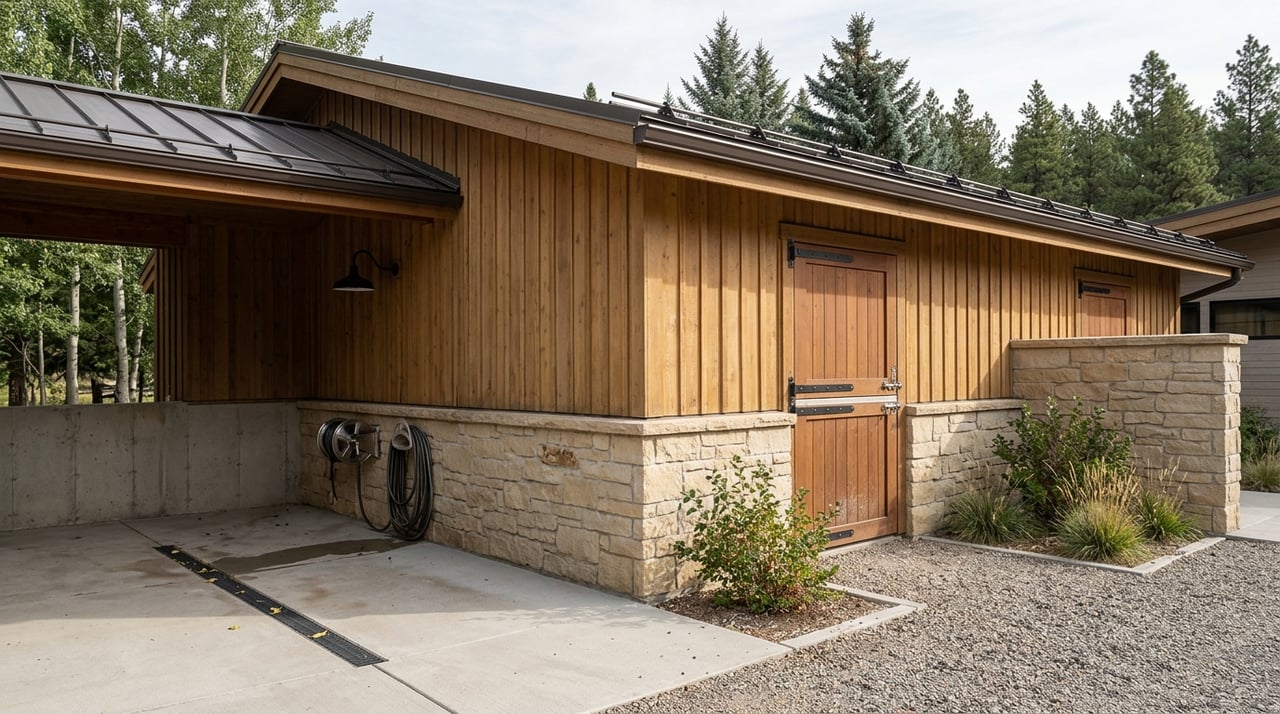
For many buyers, an existing equestrian setup can be just as important as the land itself. A property with useful improvements may reduce the time, cost, and uncertainty involved in creating a horse-ready estate from scratch.
Pitkin County notes that agricultural structures may be exempt from certain floor area and growth-management rules if they meet code requirements. The county also distinguishes among agricultural buildings such as loafing sheds, equipment storage buildings, hay storage buildings, barns, and greenhouses, with allowable sizes that vary by acreage.
The county further notes that some structures, including agricultural buildings, caretaker dwellings, and accessory structures with bathing facilities, commonly require covenant agreements. For buyers, this means existing barns and related improvements should be reviewed carefully, not just admired.
If a property already has horse-related structures, it helps to verify more than appearance and condition. You will want to understand how those improvements fit within current county rules.
Your review may include:
In Woody Creek and Old Snowmass, trail access is not just a lifestyle perk. For many equestrian buyers, it is central to the property’s appeal.
The Rio Grande Trail is one of the area’s most important assets. Pitkin County says it is open year-round in the county, allows horseback riding, connects Aspen and Glenwood Springs, and extends through the Roaring Fork Gorge to Wilton Jaffee Sr. Park near Woody Creek.
That kind of access can shape how often you ride and how enjoyable ownership feels over time. It also adds value beyond the parcel itself, especially for buyers who want conditioning routes and broader public-land connectivity.
Old Snowmass offers especially notable access for riders who value a ranch-and-wilderness setting. Pitkin County says the Snowmass Creek Trailhead is one of the most popular access points to the Maroon Bells-Snowmass Wilderness and serves equestrians along with other wilderness visitors.
That gateway character is a meaningful part of Old Snowmass’s appeal. It supports a lifestyle that feels more dispersed, more land-based, and often more aligned with buyers seeking direct access to backcountry riding opportunities.
Not every nearby trail will support the type of riding you want. Pitkin County’s seasonal trail information shows that some routes close during part of the year, and some are not horse-legal at all.
That is why experienced buyers do not stop at “near trails.” They verify whether the specific trails they plan to use allow horses and whether seasonal closures could affect how they use the property.
Although both areas appeal to equestrian buyers, they offer different experiences. Your choice often comes down to what kind of setting, access, and daily rhythm you want.
Woody Creek tends to feel closer in and more connected to the river corridor. The Aspen Chamber describes it as about 10 miles from Aspen and notes its popularity as a summer bike destination along the Rio Grande Trail.
Pitkin County’s Roaring Fork Gorge materials add river frontage, rafting, kayaking, angling, and trail connectivity to that picture. Taken together, these details suggest a setting that feels recreation-focused, connected, and somewhat more active.
For an equestrian buyer, Woody Creek may appeal if you want easier Aspen access paired with a strong trail-and-river identity. It can feel ideal for buyers who want horses to be part of a broader outdoor lifestyle rather than the only defining feature of the property.
Old Snowmass often reads more like a ranch corridor with a stronger agricultural character. Pitkin County open-space holdings in the area include Wheatley Open Space, Deer Creek Open Space, and Lazy Glen Open Space, each contributing to the area’s broader sense of open land, agricultural use, and trail connection.
These holdings include features such as irrigated lease area, horse pasture, barn space, river frontage, and national-forest access. Aspen Chamber descriptions of the scenic roads in the area further reinforce a rolling, dispersed landscape that feels tied to ranch land and wilderness access.
For an equestrian buyer, Old Snowmass may be the better fit if you want more pasture-like terrain, a stronger ranch feel, and a setting that reads as more removed and land-oriented.
In this part of Pitkin County, buyers benefit from checking core land-use details before they become emotionally attached to a property. What looks perfect at first glance may come with constraints that affect barns, access, or future improvements.
Pitkin County encourages owners and applicants to verify the parcel’s zone district, caucus area, and other factors when estimating what a property can support. The county also notes that allowable floor area may depend on zone district, caucus area, prior approvals, and tools such as GMQS and TDR.
For equestrian buyers, that makes early diligence especially important. You will want clear answers on setbacks, covenant status, agricultural structures, trail access, and the property’s physical layout before moving too far down the path.
Before you proceed, consider confirming:
This kind of review helps protect both your vision and your timeline. It also allows you to compare properties based on how they function, not just how they photograph.
If you are considering an equestrian purchase in Woody Creek or Old Snowmass, a private, property-specific review can make the search far more efficient. Stephanie Lewis offers discreet, principal-led guidance for buyers seeking legacy ranch properties, trophy estates, and curated opportunities in Aspen and the Roaring Fork Valley.
Stay up to date on the latest real estate trends.

She is enthusiastic, hardworking, discreet and is intimately familiar with the local real estate market. She has worked with a wide range of American and International clientele, spanning the world of finance, media, entertainment and real estate.