
March 24, 2026
Looking for wide‑open space with quick access to Aspen? McLain Flats delivers ranch‑style living, equestrian potential, and sweeping Elk Range views within a short drive of downtown. If you want privacy, usable land, and room to build, this plateau above the valley floor is worth a close look. In this guide, you’ll learn where McLain Flats sits, what acreage options are common, how Pitkin County rules shape what you can build, and the key due‑diligence steps before you buy. Let’s dive in.
McLain Flats is the elevated mesa west of Aspen’s roundabout and Cemetery Lane in ZIP 81611. Many brokers describe it as roughly an 8–12 minute drive to downtown, depending on the specific driveway and traffic conditions. You can sample that proximity from listings marketed as “10 minutes to town,” such as the paired building parcels at 1763/1765 McLain Flats Road that highlight the quick access to Aspen’s core as described in listing materials.
The area is known for its broad, high‑country feel and big‑sky panoramas. Many homes and ranch estates frame views of Aspen Mountain and the Elk Range. The plateau’s relatively level terrain makes it practical for lawns, pastures, and equestrian facilities while keeping you close to Aspen’s dining, culture, and skiing.
Lot sizes vary widely. You’ll see single‑parcel acreages in the roughly 5–11 acre range, plus larger legacy estates and a few very large ranch holdings. For context, recent examples span from mid‑single‑digit acres to 20‑plus acres, including a legacy 21.38‑acre estate at 1650 McLain Flats Road that showcases the classic ranch program with a barn and expansive grounds as described by the listing brokerage. “Typical” depends on the subdivision you’re in, so it pays to compare neighborhoods like White Horse Springs, White Star Ranch, Star Mesa, and others.
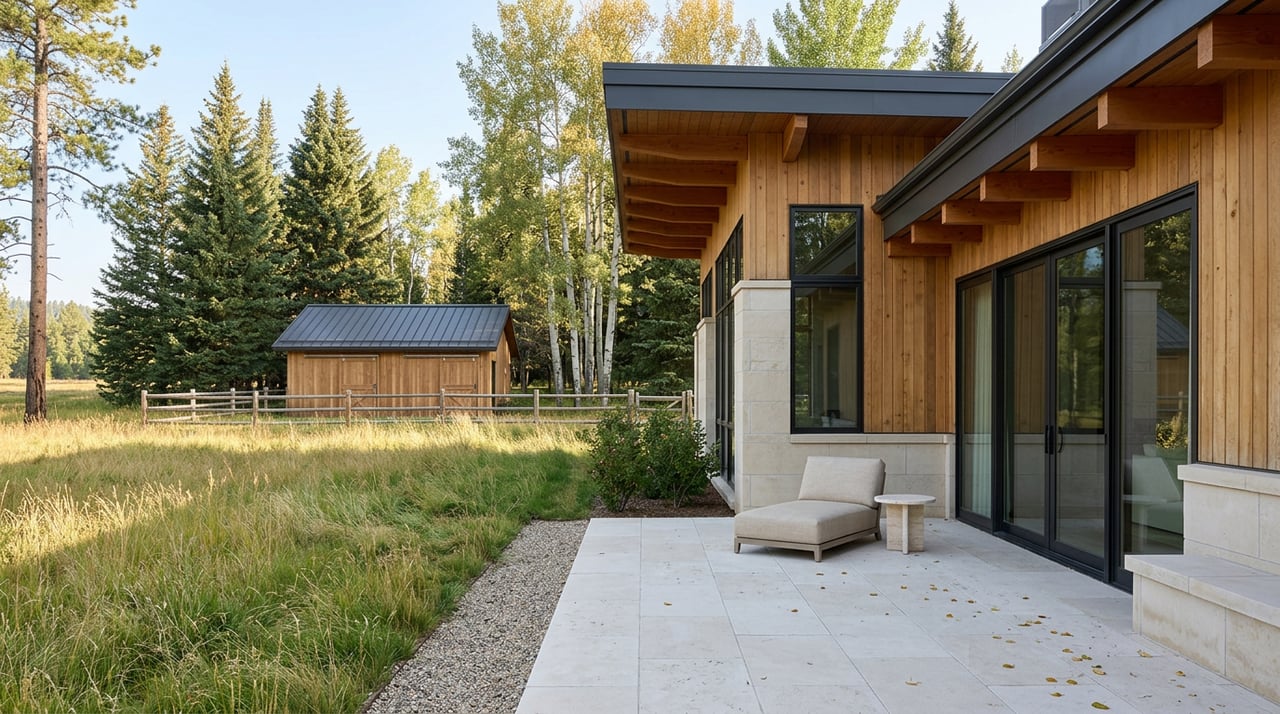
McLain Flats has a long equestrian character. Many properties include barns, fenced paddocks, loafing sheds, and arenas. County rules allow agricultural buildings under specific criteria, which makes the area attractive if you plan to keep horses. More on those rules below.
Water in Colorado is its own system, and rights do not automatically come with the land. Some parcels include irrigation shares or domestic rights, while others connect to small community systems such as the White Horse Springs Water & Sanitation District. You can review the district’s public water quality report to understand its system and service area in general through the current CCR. Always confirm whether a property relies on a private well, a district tap, or recorded water shares.
Much of McLain Flats offers relatively level building benches, but individual parcels can include wetlands, riparian areas, or slope changes. Pitkin County enforces riparian protections and setbacks, so factor possible buffers and mitigation into your planning by reviewing the county’s summary of wetlands and riparian areas. Septic feasibility and driveway alignment also run through the county’s site‑plan process.
Most of McLain Flats sits in unincorporated Pitkin County, which means the Pitkin County Land Use Code governs zoning, building size, and review procedures. City of Aspen rules, fees, and transfer taxes apply only within city limits. If you’re new to rural Pitkin County, the county’s practical “Rural Living” guide is a helpful primer on services, roads, water, and expectations for country parcels outlined by Pitkin County.
Pitkin County sets a base allowable house size by zone district. Many McLain Flats parcels fall in rural/resource zones such as RS‑20 or AR‑10, each defined in Chapter 3 of the Land Use Code. Larger homes often rely on Transferable Development Rights (TDRs) or previously vested approvals. Because the TDR program and square‑foot caps can change, confirm the current code and any parcel‑specific approvals before you value a property on assumed build potential.
New development typically moves through an activity‑envelope and site‑plan review that maps wetlands, riparian corridors, slopes, wildlife habitat, septic fields, and access points. Expect to work with surveys and agency referrals during this process. You can preview the county’s steps and submittal items in the Land Use Application Manual.
Pitkin County provides agricultural floor‑area exemptions for certain non‑residential farm structures, including barns, hay and equipment storage, greenhouses, and loafing sheds. These exemptions are tied to parcel size and include clear design and occupancy limits. If your plan depends on a new or expanded barn, read the county’s Agriculture Building FAR Exemptions and verify eligibility before you assume any square footage or convert a barn to living space.
Beyond on‑site riding and pastures, you’re close to the valley’s trail network. The Rio Grande corridor and the Sunnyside/Stein trail connections are popular for recreation. To get a feel for the terrain just above the mesa, preview the profile and map of the Sunnyside Trail.
Before you write an offer on acreage in McLain Flats, verify these essentials:
Market prices in 81611 move quickly and vary with views, water, approvals, and build potential. Use examples for scale and setting rather than price guidance, and verify current inventory and terms before you act.
Acreage living near Aspen blends lifestyle and land‑use detail. The right guidance helps you evaluate water, zoning, TDR paths, and site constraints before you commit. If you want curated access to on‑ and off‑market McLain Flats estates and a principal‑led advocate who understands Pitkin County’s process, connect with Stephanie Lewis to book a private consultation.
Stay up to date on the latest real estate trends.
She is enthusiastic, hardworking, discreet and is intimately familiar with the local real estate market. She has worked with a wide range of American and International clientele, spanning the world of finance, media, entertainment and real estate.